ELECTRONIC_PROJECTSCIRCUIT • DESIGN • BUILD
Connecting Circuits...

create a professinal projects with high quality and high reliability
No achievements listed yet.
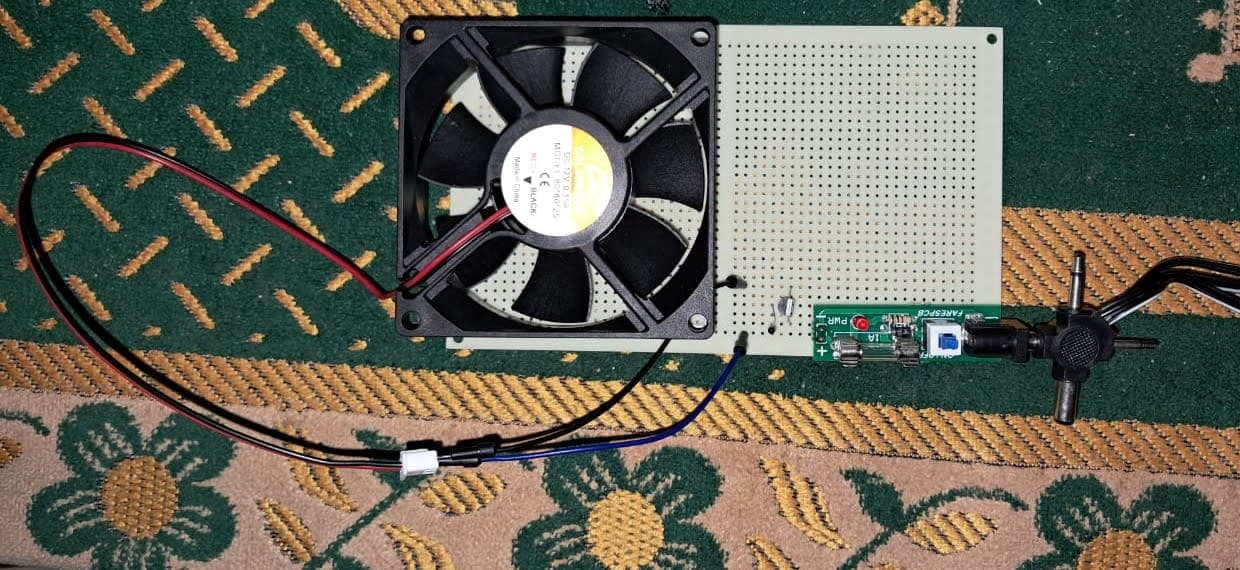
Simple temperature-activated fan control circuit. This is a project to cool electrical devices when their temperature rises. Main Features: The fan is connected between the collector and the positive source, and the emitter is connected to the negative source. What happens is that no current flows through the circuit unless there is current at the base. This is where the thermistor comes in. The thermistor is of the NTC type. As the temperature increases, its resistance decreases, and more current flows through it. the more current passes, the faster the fan runs. So, the fan runs faster as the temperature increases. What can we learn from this project? For example In computers or laptops, when the processors are under pressure, they heat up and need more cooling depending on the intensity of the heat. This is where this project comes in. As the temperature of the processor increases, the fan speed increases, providing better cooling. Of course, I have talked about one application, but in reality, the project has many practical applications. you can see the project explained on youtube >> https://youtu.be/do99BR8ERoE
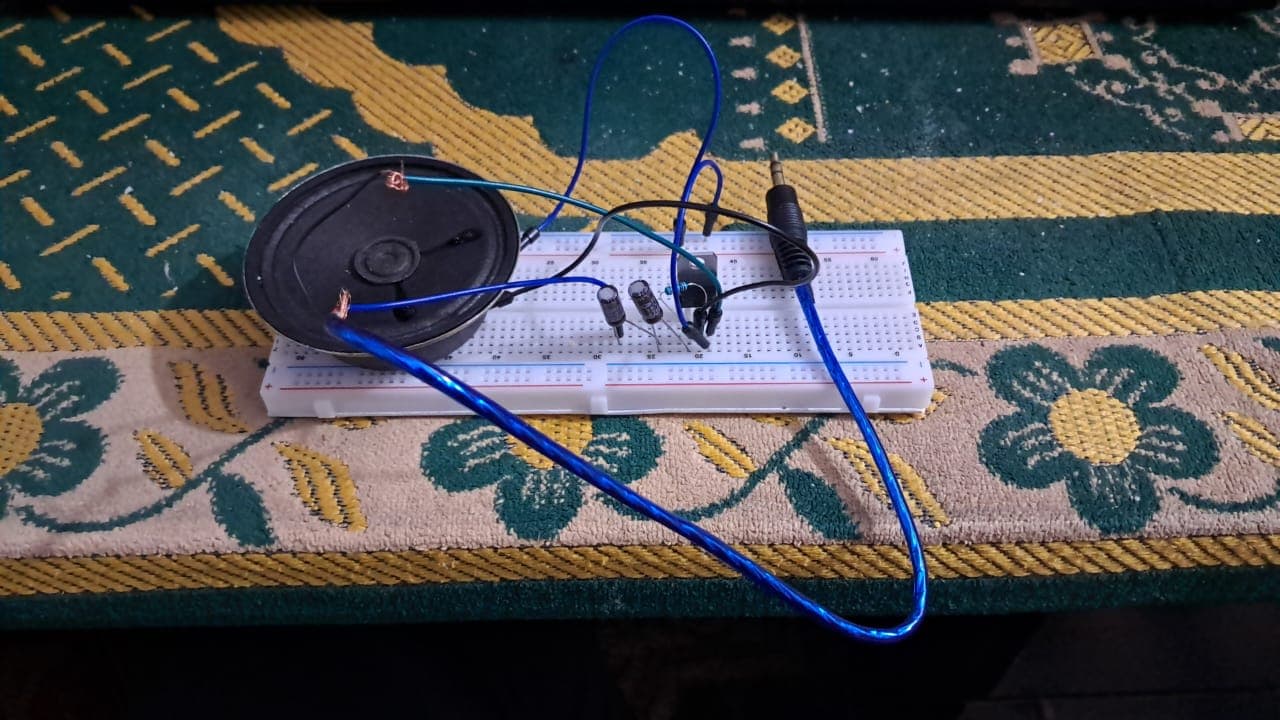
Sound Amplifiering with simple tools (TIP41C Transistor NPN, two Capacitor 47 uF, Speaker, Resistor 2 kohm , 3.5mm Audio jack). This project is used to amplify the sound coming out of the phone or any sound source (microphone, laptop, computer, etc...). A very weak audio signal enters from the JP1 port. The signal passes through capacitor C1 which filters it of any static (DC) electrical charges and leaves only the varying sound waves. These weak waves reach the “base” of transistor Q1. The transistor works like a "water valve". The very small current of sound opens and closes the valve very quickly. This valve controls a much larger current coming from the battery (V1). The large variable current (which is an amplified version of the original audio signal) passes through speaker U1. Transformations of this current cause the speaker cone to vibrate, producing the audible sound.
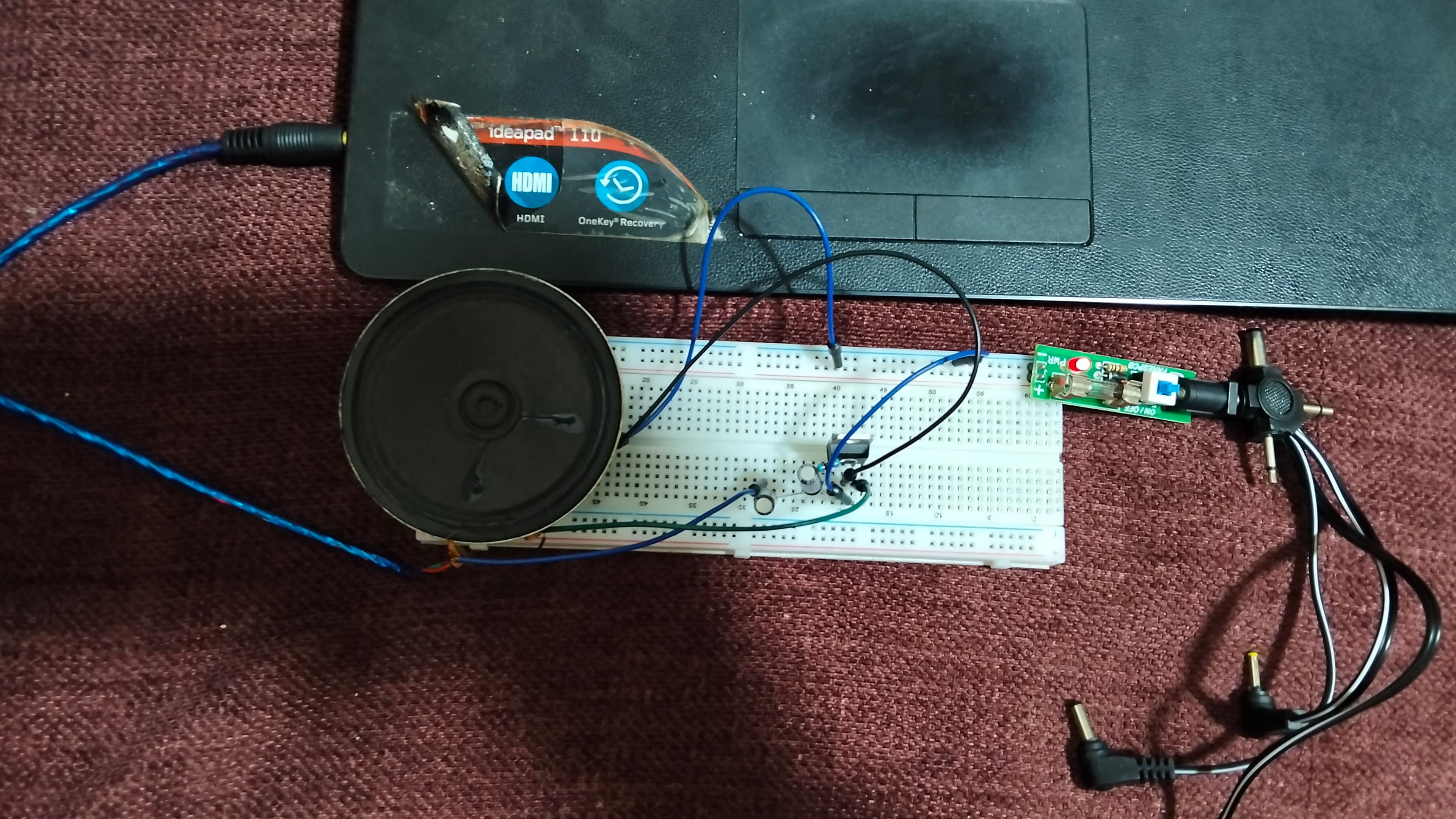
Sound Amplifiering with simple tools (TIP41C Transistor NPN, two Capacitor 47 uF, Speaker, Resistor 2 kohm , 3.5mm Audio jack). This project is used to amplify the sound coming out of the phone or any sound source (microphone, laptop, computer, etc...). A very weak audio signal enters from the JP1 port. The signal passes through capacitor C1 which filters it of any static (DC) electrical charges and leaves only the varying sound waves. These weak waves reach the “base” of transistor Q1. The transistor works like a "water valve". The very small current of sound opens and closes the valve very quickly. This valve controls a much larger current coming from the battery (V1). The large variable current (which is an amplified version of the original audio signal) passes through speaker U1. Transformations of this current cause the speaker cone to vibrate, producing the audible sound.